Anime AI Prompts: Complete Image & Video Guide
Expressive eyes, hand-drawn aesthetics, dynamic movement, and rich world-building make anime one of the most recognizable visual styles in digital media. Anime AI prompts can help creators turn character ideas, visual scenes, and story concepts into consistent digital artwork and short video sequences.
On The Prompt Home, the Anime AI category covers a broad range of anime-inspired visual styles, character designs, storytelling formats, and prompt techniques for creating illustrations, manga panels, environments, avatars, and animated scenes.
Compared with realistic photography and many 3D animation styles, anime-inspired visuals often emphasize expressive linework, stylized character features, emotional facial expressions, distinctive hair designs, and deliberate lighting choices. Generative AI tools span a broad spectrum—from hand-painted cinematic backdrops to sharp cel-shaded action characters, nostalgic retro panels, vertical webtoons, and futuristic mecha designs.
This guide provides a comprehensive overview of how anime AI prompts work, where creators apply them, how image prompting differs from video motion, how to maintain character consistency, and how to write effective prompts step by step.
What is the Anime AI Category?
On The Prompt Home, this category brings together prompt structures, visual styles, and keywords designed to produce anime-inspired graphics and moving clips. Across tools like Midjourney, Leonardo AI, ChatGPT, Runway, Kling AI, and Pika, anime prompting generally falls into two primary formats:
Anime Static Images: Character illustrations, wallpaper art, manga panels, and environment concepts. To find pre-tested prompts for still artwork, browse our Anime AI Image Prompts gallery.
Anime Video Animations: Character movement sequences, wind effects, camera sweeps, and emotional dialogue loops. For motion concepts, check out our Anime AI Video Prompts collection.
Organizing these artistic prompts into a dedicated category helps creators choose a consistent sub-style quickly without mixing up technical art terminology.
Creative Ways to Use Anime AI Prompts
Anime-style graphics give creators and storytellers an adaptable medium for building visual projects efficiently.
Here are five practical ways creators use this visual niche:
1. Webtoons, Manga Panels, and Storyboards
Comics and digital webtoons require consistent character designs and varied camera angles. Anime prompts allow independent creators to lay out visual storyboards and concept illustrations efficiently.
2. Animated Shorts and Social Media Reels
Short anime scenes with dramatic lighting and expressive character movement are widely used on platforms such as YouTube Shorts, Instagram Reels, and TikTok. Creators often pair short video loops with lo-fi beats or narrative voiceovers.
3. VTuber Avatars and Streaming Graphics
Online streamers and content creators frequently use stylized anime characters as visual avatars, channel banners, offline screens, and promotional graphics.
4. Music Video Visualizers and Backgrounds
Indie musicians and producers use cozy anime aesthetic loops—such as rain falling outside a window or a character studying—as ambient lo-fi video backgrounds for long music tracks.
5. Anime Game Characters & Concept Art
Game developers and concept artists use anime prompts to visualize RPG character concepts, fantasy NPCs, stylized weapons, magical environments, and boss designs during early production phases.
Common Anime Prompt Types
Understanding the specific type of prompt you need makes it easier to structure your text inputs effectively.
Character & Portrait Prompts: Focus on facial expressions, hair textures, eye detail, outfits, and close-up lighting.
Full-Body Character Prompts: Focus on full-figure proportions, stance, clothing details, accessories, and shoes.
Environment & Landscape Prompts: Emphasize architectural style, time of day, atmospheric weather, and background depth.
Manga & Webtoon Panel Prompts: Highlight black-and-white ink work, panel framing, speech bubbles, screentones, or vertical scroll layouts.
Action & Dynamic Motion Prompts: Focus on camera perspective, body momentum, glowing spell/energy effects, and motion blur.
Anime Video Motion Prompts: Define temporal movement, camera panning/zooming, facial animation, and scene flow over time.
Anime Prompt Planning Guide
Use this planning matrix to identify key focus areas for different prompt goals:
| Prompt Goal | Primary Focus Area | Recommended Keywords |
| Character Portrait | Facial emotion, hair, eyes, close-up lighting | Close-up portrait, expressive eyes, detailed hair, soft rim lighting |
| Dynamic Action | Body pose, momentum, dramatic camera angle | Dynamic action pose, low angle shot, motion blur, energetic aura |
| Cozy Environment | Architecture, weather, warm lighting, atmosphere | Hand-painted landscape, golden hour, cozy atmosphere, ambient glow |
| Manga / Comic Panel | Ink lines, shading, panel layout, narrative focus | Black and white manga panel, screentone shading, bold ink linework |
| Video Motion Loop | Hair/clothing movement, camera tracking, timing | Gentle wind motion, slow panning camera, seamless continuous loop |
| Character Consistency | Fixed visual anchors, reference details, neutral backdrop | Character reference sheet, identical outfit, fixed color palette |
Anime AI Aspect Ratio Guide
Choosing the correct aspect ratio ensures your anime art fits your intended publishing platform without awkward cropping:
| Aspect Ratio | Primary Platform & Use Case | Best Used For |
| 1:1 (Square) | Instagram Posts, Profile Pictures, Avatars | Character portraits, stickers, channel icons |
| 4:5 (Vertical Standard) | Instagram Feed, Facebook Posts | Medium-shot character art, vertical illustrations |
| 9:16 (Vertical Full) | TikTok, YouTube Shorts, Instagram Reels | Mobile webtoons, vertical video loops, phone wallpapers |
| 16:9 (Widescreen) | YouTube, Desktop Wallpapers, Landscape Banners | Cinematic anime scenes, environment visuals, video clips |
| 3:2 or 2:3 (Traditional/Print) | Concept art, print illustrations, covers, and selected comic layouts | Storyboard layouts, physical novel art, manga pages |
Popular Anime & Manga Visual Styles in This Category
The anime visual medium is diverse. Knowing key sub-styles helps you choose the right prompt keywords for your visual project.
1. Hand-Painted Cinematic (Painterly & Studio-Inspired)
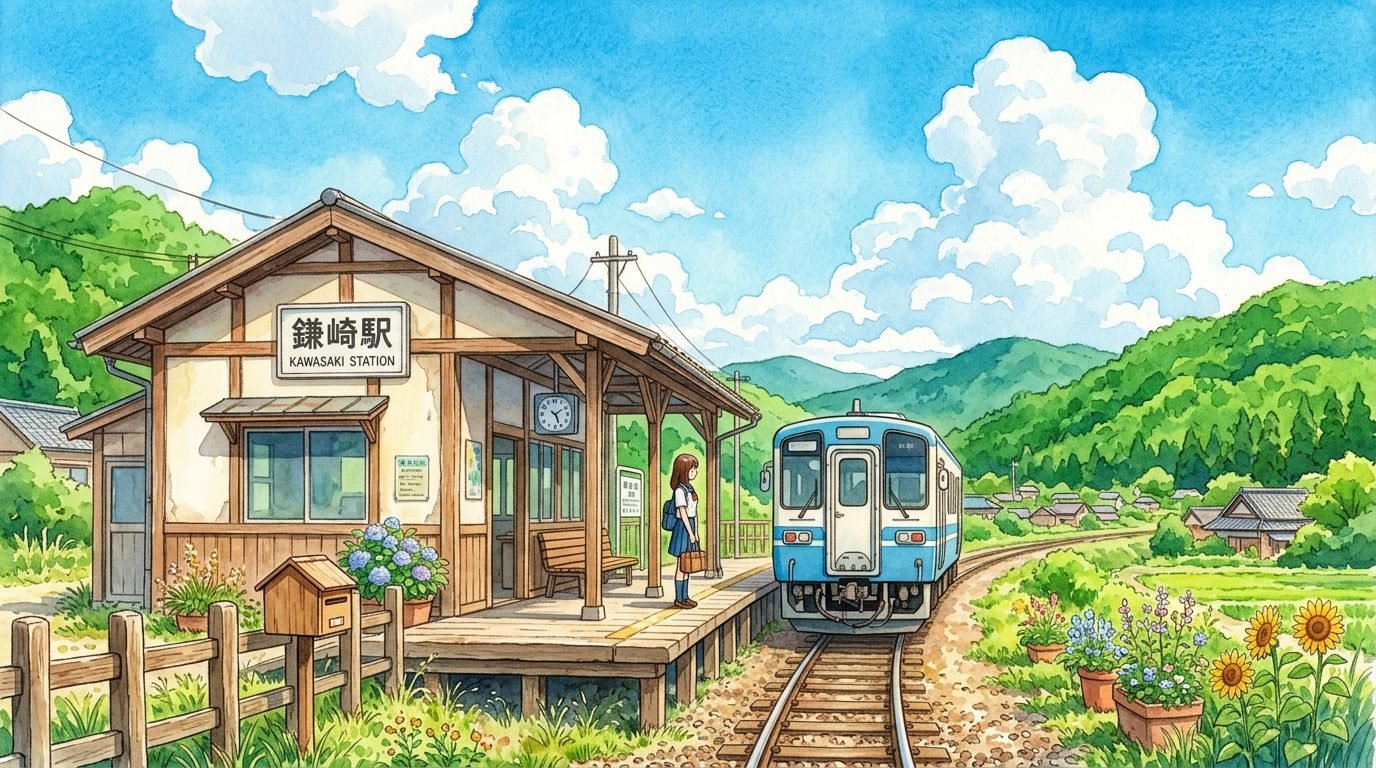
This aesthetic relies on watercolor-like painterly backgrounds, soft natural sunlight, detailed lush scenery, and nostalgic, peaceful atmospheres.
Best Used For: Nature scenes, cozy storybooks, fantasy landscapes, and calm video loops.
Key Prompt Terms: Hand-painted watercolor background, soft natural sunlight, nostalgic anime art, detailed scenery, peaceful ambiance.
2. Retro 90s Anime (Cel-Shaded & VHS Aesthetic)
Inspired by classic 1990s television animation, this look features visible film grain, bold black outlines, vibrant retro color palettes, and subtle muted contrast.
Best Used For: Retro music visualizers, cyberpunk aesthetics, and vintage poster designs.
Key Prompt Terms: 1990s anime style, vintage cel shading, subtle VHS film grain, retro anime aesthetic, bold line art.
3. Modern Shonen & Cinematic Action
This style emphasizes sharp linework, high-contrast dramatic lighting, dynamic action poses, glowing energy effects, and intense perspective angles.
Best Used For: Action concepts, game character reveals, and dynamic video sequences.
Key Prompt Terms: Modern shonen anime, dramatic action pose, cinematic lighting, vibrant energy glow, sharp linework, dynamic angle.
4. Shojo & Romantic Anime
Characterized by soft facial features, expressive sparkling eyes, delicate line art, floral accents, and gentle pastel lighting.
Best Used For: Romance covers, emotional story panels, and character portraits.
Key Prompt Terms: Shojo anime aesthetic, soft delicate linework, romantic pastel lighting, expressive sparkling eyes, elegant design.
5. Cute Chibi & Mini Style
Chibi art features exaggerated proportions—oversized heads, small bodies, simplified shapes, and expressive emotional faces.
Best Used For: Stickers, Twitch emotes, social avatars, and lighthearted humorous clips.
Key Prompt Terms: Chibi anime style, exaggerated cute proportions, expressive face, simple clean line art, pastel colors.
6. Seinen & Mature Cinematic Anime
Focuses on realistic body proportions, darker lighting schemes, detailed realistic environments, and grounded character designs.
Best Used For: Dark fantasy concepts, thriller comics, cinematic wallpapers, and narrative shorts.
Key Prompt Terms: Seinen anime aesthetic, grounded proportions, moody atmospheric lighting, cinematic shadows, detailed realistic environment.
7. Manga & Black-and-White Ink Style
Mimics traditional Japanese comics using high-contrast black-and-white ink work, visible screentones, cross-hatching, and dramatic panel framing.
Best Used For: Graphic novel illustrations, comic panels, and high-impact line art posters.
Key Prompt Terms: Black and white manga style, ink line art, screentone shading, high contrast, detailed cross-hatching.
8. Cyberpunk & Sci-Fi Anime
Combines neon cityscapes, holographic interface elements, and futuristic fashion with crisp anime character design.
Best Used For: Sci-fi visualizers, music covers, and futuristic video loops.
Key Prompt Terms: Cyberpunk anime style, neon illuminated background, futuristic tech gear, dark atmospheric lighting, sleek aesthetic.
9. Anime Fantasy & Magic Systems
Features enchanted forests, floating castles, glowing magical runes, spellcasting effects, and ornate fantasy armor.
Best Used For: Fantasy novel covers, RPG concept art, and magical video sequences.
Key Prompt Terms: Anime dark fantasy, glowing magic runes, enchanted forest atmosphere, ornate fantasy clothing, cinematic lighting.
10. Anime Mecha & Mechanical Suits
Focuses on complex robotic designs, mechanical armor suits, futuristic weaponry, and industrial hangar environments.
Best Used For: Sci-fi game art, mecha concept designs, and heavy action visuals.
Key Prompt Terms: Anime mecha style, mechanical armor suit, intricate mechanical detail, metallic paneling, industrial sci-fi lighting.
11. Slice-of-Life & Cozy Anime
Focuses on relatable everyday environments—cozy bedrooms, quiet school hallways, rainy street corners, neighborhood cafés, and domestic warmth.
Best Used For: Lo-fi music visualizers, peaceful social content, and emotional storytelling clips.
Key Prompt Terms: Slice of life anime, cozy atmosphere, warm lighting, everyday peaceful scene, detailed interior, soft color palette.
12. Magical Girl & Fantasy Heroine
Defined by vibrant sparkling transformation themes, ornate magical outfits, glowing wands, floating ribbons, and colorful cosmic energy effects.
Best Used For: Magical fantasy covers, character concept art, and vibrant social media visuals.
Key Prompt Terms: Magical girl anime aesthetic, ornate magical costume, sparkling ribbon effects, glowing magical aura, vibrant colorful lighting.
13. Anime Horror & Dark Fantasy
Utilizes unsettling atmospheric shadows, eerie lighting, supernatural creatures, psychological tension, and muted color palettes.
Best Used For: Horror graphic novels, dark storytelling illustrations, and suspenseful game art.
Key Prompt Terms: Anime horror aesthetic, eerie atmospheric lighting, deep shadows, supernatural ambiance, psychological suspense, muted color tones.
14. Sports & High-Energy Action Anime
Highlights physical momentum, sweat details, dramatic muscle tension, impact lines, speed trails, and competitive stadium lighting.
Best Used For: Sports comic panels, action promos, and high-energy video sequences.
Key Prompt Terms: Sports anime style, high energy momentum, impact lines, intense expression, speed blur, dramatic stadium lighting.
15. Webtoon & Manhwa Digital Art Style
Tailored for modern vertical digital comics, featuring clean digital linework, soft gradient shading, vibrant character coloring, and cinematic panel framing.
Best Used For: Webtoon covers, vertical scroll comics, digital romance novels, and manhwa character reveals.
Key Prompt Terms: Webtoon digital art style, clean linework, vibrant gradient shading, modern manhwa aesthetic, sleek character design.
Prompting for Still Images vs. Video Clips
Writing a prompt for a still anime illustration requires a slightly different approach than prompting for a moving video sequence.
| Prompt Type | Main Focus | Typical Elements Included | Useful Tools |
| Anime Still Image Prompts | Character pose, background details, art style | Subject details, line art style, lighting direction, camera shot framing | Midjourney, Leonardo AI, ChatGPT |
| Anime Video Motion Prompts | Action, wind/hair movement, camera path, continuity | Subject motion, camera pan/zoom, environmental movement, visual consistency | Runway, Kling AI, Pika |
For Image Prompts: Focus on subject features, line art style, background scenery, framing, and lighting highlights.
For Video Prompts: Focus on movement cues, timing, and continuity. Describe actions sequentially across time intervals. For multi-scene video projects, keep the character’s hairstyle, clothing, colors, facial features, and environment consistent from shot to shot.
Time-Based Video Prompt Structure Example
When writing motion prompts for tools like Runway or Kling AI, structuring your description by time intervals helps control movement pace:
“0–2 seconds: The anime warrior slowly opens his eyes under dark ambient lighting. 2–5 seconds: A gentle breeze moves his hair and jacket while energy sparks begin to glow. 5–8 seconds: The camera slowly zooms in as glowing particles float upward.”
How to Create Consistent Anime Characters
Maintaining visual consistency across multiple panels or scenes is a common challenge in anime prompting. Use these practical strategies to keep your characters looking uniform:
1. Lock a Core Consistency Prompt Block
Create a fixed block of character descriptors and keep it identical across all scene prompts:
Consistency Block Template:
Character: 22-year-old adult anime warrior | Hair: messy silver hair, chin-length | Eyes: sharp deep blue eyes | Outfit: black leather jacket with red collar trim | Signature Item: silver pendant necklace | Art Style: clean modern anime line art
Keep this exact character block unchanged across scenes, modifying only the action, background environment, or camera framing.
2. Define Signature Accessories
Add distinct visual anchors like a red scarf, circular silver earrings, or a jacket emblem to help identify the character immediately.
3. Generate a Character Reference Sheet
Create a single image prompt showing multiple views (front view, side profile, full-body shot, facial expression sheet) against a plain neutral backdrop to establish character proportions.
4. Use Shot Framing Terms
Specify shot types (full-body shot, medium portrait shot, close-up face shot) so the AI renders predictable proportions.
5. Leverage Image References
Use image-to-image or character reference features in platforms like Midjourney or Leonardo AI to lock in facial structure before generating new poses.
Positive & Negative Prompting for Anime Artwork
Whenever possible, describe what you want positively first, then use negative instructions to reduce common artifacts.
Positive Descriptors First: Specify crisp features (clean linework, symmetrical eyes, detailed hands, vibrant lighting) directly in your main prompt.
Negative Keywords to Clean Up Artifacts: Add negative keywords to filter out unwanted distortions.
Common Negative Keywords for Anime Art
blurry, distorted face, extra fingers, extra limbs, malformed hands, inconsistent eyes, low detail, cropped head, duplicate character, low resolution
Note: Negative prompt support varies by platform. Some AI generators provide a dedicated negative-prompt field, while others use parameters or instruction-based methods to reduce unwanted elements.
A Simple Anime AI Prompt Formula
When you pick a prompt template from The Prompt Home, you can customize it using this practical formula:
Subject + Appearance + Anime Style + Action/Emotion + Environment + Lighting + Camera/Composition
Practical Example
Suppose a card prompt reads: “An anime girl standing on a street.” Here is how you can customize it into a detailed prompt:
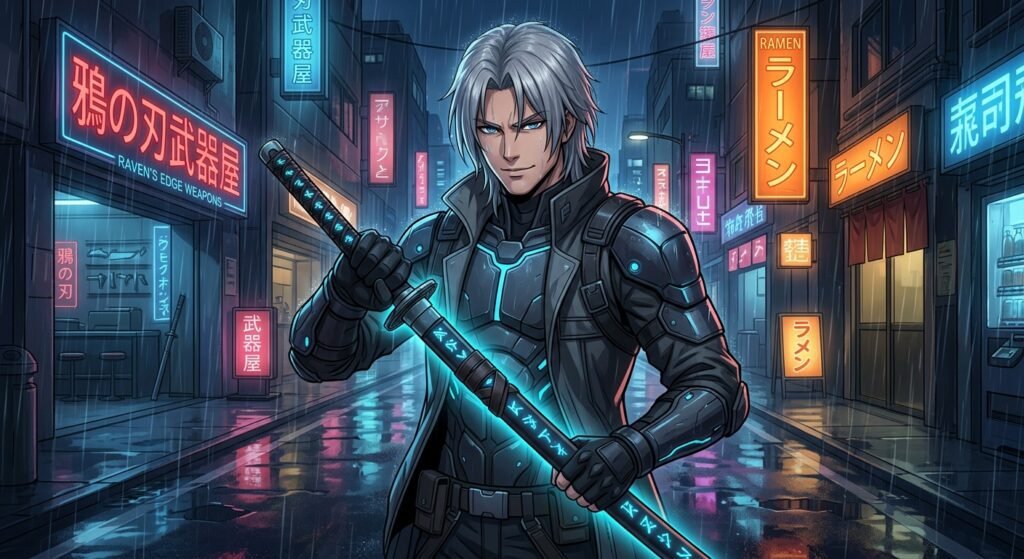
Subject & Appearance: “An adult anime warrior with silver hair, blue eyes, and sharp features”
Anime Style: “Modern shonen anime aesthetic, clean linework”
Action / Emotion: “Standing confidently, holding a glowing sword sheath”
Environment: “A rain-slicked city street at night with glowing neon shop signs”
Lighting & Composition: “Dramatic cinematic lighting, reflections in water puddles, medium portrait shot”
Your Customized Prompt:
“An adult anime warrior with silver hair, blue eyes, and sharp features, modern shonen anime aesthetic, clean linework, standing confidently holding a glowing sword sheath, rain-slicked city street at night with glowing neon shop signs, dramatic cinematic lighting, reflections in water puddles, medium portrait shot, high-detail digital artwork.”
Simple Workflow: Creating a Short Anime AI Video
To convert a static anime concept into an animated short video loop, follow this practical workflow:
Outline a Short Action: Plan a 5 to 10-second moment. Example: “An anime character standing on a grassy hill as wind blows through their hair and cherry blossom petals drift past.”
Generate the Base Image: Create your initial character art using Midjourney, Leonardo AI, or ChatGPT.
Animate the Scene: Runway, Kling AI, and Pika can be useful for adding motion to anime stills. Upload your base image and add motion cues like “gentle wind blowing hair, cherry blossom petals drifting, slow camera push-in.”
Review & Refine: Inspect the generated clip for visual artifacts, distorted hands, or unnatural hair flickering before finalizing.
Add Audio: Combine your animated video clip with fitting lo-fi background music or ambient sound effects using an editor like CapCut.
Publish: Share your anime short loop on YouTube Shorts, TikTok, or Instagram Reels.
Ready-to-Use Anime Prompts You Can Try
1. Hand-Painted Landscape Image Prompt (Midjourney / Leonardo AI)
2. Action Motion Video Prompt (Runway / Kling / Pika)
Anime Style Quick Reference
Use this reference table to match your project idea with a suitable anime style variant:
| Style Variant | Primary Visual Feature | Common Project Use | Useful Tools |
| Hand-Painted / Painterly | Soft watercolor background, warm light | Lo-fi music loops, peaceful storybooks | Midjourney, Leonardo AI |
| Retro 90s Cel | Visible film grain, retro colors, bold lines | Music visualizers, vintage posters | Midjourney, FLUX |
| Modern Shonen | Sharp linework, energetic glow, dynamic angles | Action shorts, game graphics | Midjourney, Leonardo AI |
| Shojo | Soft facial lines, delicate pastels, sparkling eyes | Romance covers, emotional panels | Midjourney, DALL-E 3 |
| Chibi | Small bodies, oversized heads, simple lines | Twitch emotes, stickers, avatars | Midjourney, DALL-E 3 |
| Seinen | Grounded proportions, dark lighting, realism | Thrillers, dark fantasy, wallpapers | Midjourney, FLUX |
| Manga (B&W) | High contrast black ink, screentones, line art | Graphic novels, comic panels | Midjourney, Stable Diffusion |
| Cyberpunk | Neon reflections, glowing tech gear, night cities | Sci-fi concepts, video backgrounds | Midjourney, Runway, Kling AI |
| Fantasy | Magical runes, enchanted scenery, ornate armor | RPG concept art, novel covers | Midjourney, Leonardo AI |
| Mecha | Intricate mechanical armor, robotic joints | Sci-fi game designs, industrial art | Midjourney, Leonardo AI |
| Slice-of-Life | Cozy interior/exterior scenes, warm light | Lo-fi visualizers, social clips | Midjourney, DALL-E 3 |
| Magical Girl | Vibrant colors, transformation ribbons, wands | Character concepts, fantasy art | Midjourney, Leonardo AI |
| Anime Horror | Eerie lighting, atmospheric shadows, dark tones | Graphic novels, suspense visuals | Midjourney, Stable Diffusion |
| Sports Anime | High momentum, speed trails, impact lines | Action promos, sports panels | Midjourney, Leonardo AI |
| Webtoon / Manhwa | Clean digital lines, soft gradients, vertical art | Webtoons, digital comic covers | Midjourney, Leonardo AI |
Commercial Use & Responsible Prompting
When creating anime visuals for commercial projects, keep these practical guidelines in mind:
Studio & Franchise Names: While terms referencing famous studios or franchises help guide art styles during personal experimentation, avoid assuming that referencing copyrighted intellectual property grants commercial usage rights. Using a well-known character or franchise name in a prompt does not automatically give you permission to commercially use that character or related intellectual property.
Descriptive Prompting for Commercial Assets: For commercial products, books, or merchandise, describe specific visual characteristics (hand-painted watercolor, cel-shaded linework, soft ambient glow) rather than copying specific trademarked characters or studio names.
Check Tool Licensing Terms: Check whether the generator grants commercial-use rights for the specific type of output you generate and under the plan you are using before selling or licensing results. For specific commercial or licensing questions, consult the relevant rights holder or a qualified legal professional.
Frequently Asked Questions (FAQs)
What should I include in an anime AI prompt?
A comprehensive anime AI prompt can include the main subject, facial/clothing details, art style, action or emotion, environment, lighting direction, camera shot framing, and aspect ratio. For video prompts, also describe movement cues, timing, and camera tracking.
What are anime AI prompts used for?
Anime AI prompts can be used to create character concept art, digital comic storyboards, webtoon panels, lo-fi music video backgrounds, avatar graphics, game concept art, and short animated video clips.
How do I keep anime AI artwork from becoming too cluttered?
Keep your composition focused on one main subject. Limit secondary background elements, define the lighting clearly, and specify a simple or clean backdrop when the character outfit itself is detailed.
Can I use anime AI prompts for commercial projects?
Yes, but commercial usage depends on your AI platform’s subscription terms, whether your plan grants commercial licensing rights, and whether your prompts avoid copying protected, trademarked character designs.
Which tools can be used for animating static anime images?
Platforms like Runway, Kling AI, and Pika are useful for adding natural camera movement, wind effects, and subtle character motion to static anime illustrations.
Final Thoughts
The Anime AI Category offers an expansive visual medium for producing hand-drawn style artwork, dramatic story scenes, and expressive character concepts. By mastering different sub-styles—such as painterly landscapes, 90s retro cel-shading, webtoon digital art, or modern shonen aesthetics—you can guide AI generators to produce visual assets tailored to your creative projects.
eady to create your own anime visuals? Explore our Anime AI Image Prompts gallery for ready-to-use character, environment, and scene prompts, or browse our Anime AI Video Prompts collection for motion-focused ideas
About The Author
Saleem Noor is a digital creator and the founder of The Prompt Home. He creates and tests practical AI image and video prompt workflows to help creators develop visual content for social media, digital projects, and creative campaigns.